

Create with Us
About IOP
The IOP Program was established by the university to systematically enhance the impact of immersive technologies and open pedagogies through organized activities and partnerships.
What is Immersive Open Pedagogy?
Immersive Open Pedagogy is derived from two concepts: Immersive Technologies and Open Pedagogy.
Immersive Technologies.
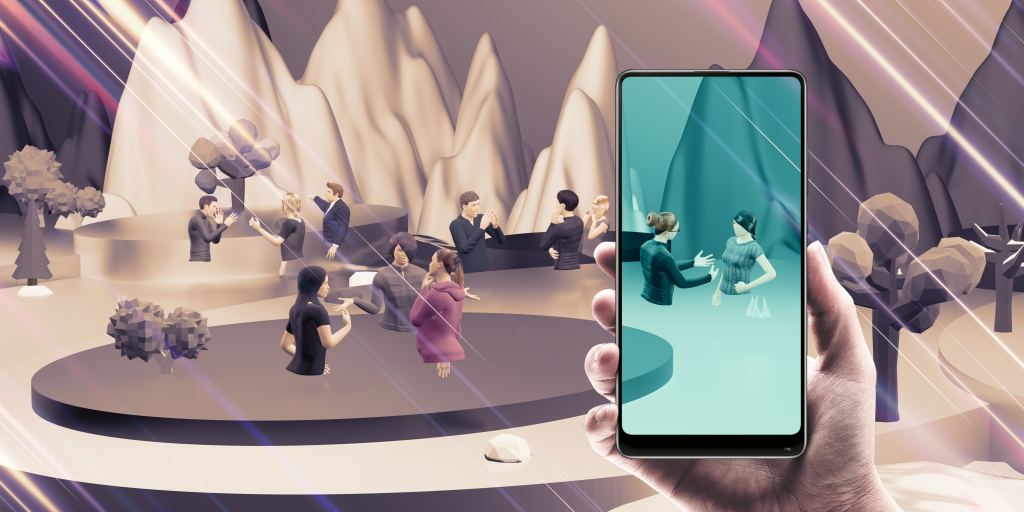
Virtual reality (VR), augmented reality (AR), mixed reality (MR) and extended reality (XR) have been identified as key to building digital competitiveness in education. Employing this class of technologies on education is now known as Immersive Learning (IL), the process of providing a learning activity or creating a learning experience with the use of simulated, artificial or virtual environments.
Open Pedagogy.
A set of teaching and learning practices only possible in the context of the free access and 4R (Reuse, Revise, Remix, Redistribute) permissions characteristic of open educational resources.

History
The Immersive Open Pedagogies (IOP) Program began in 2023 as a research initiative exploring the potential of immersive technologies for open, digital, and technology-mediated learning. Its early activities focused on supporting students and emerging researchers through collaborative research, immersive communication systems development, academic mobility, publications, and conference participation. It was proposed under the Office of the Vice Chancellor of Academic Affairs and collaborated with the Center of Open and Digital Teaching and Learning at UP Open University.
As its research network and activities expanded, IOP evolved into a more comprehensive research and innovation program housed within the Immersive Spatial Technologies and Realities Labs (ISTaR Labs) of the Faculty of Information and Communication Studies (FICS). Its research direction increasingly brought together immersive communication systems, instructional communication, and human–computer interaction, with extended reality (XR) and metaverse technologies serving as platforms for experimentation and innovation.
The program entered a significant phase of growth with the establishment of major funded initiatives, like the DOST–funded Immersive Science Communication Open Laboratory (ISCOLab). These initiatives are enabling IOP to develop an interconnected ecosystem of physical and virtual immersive laboratories, including satellite hubs across Luzon, Visayas, and Mindanao.
Moving forward, IOP is expanding from a nationally grounded research program into an internationally connected research, mentorship, and innovation ecosystem, building partnerships, pursuing international funding, and creating new opportunities for scholars to collaboratively shape the future of immersive learning.
Vision
To be a leading research and innovation program in immersive open pedagogy, advancing inclusive, evidence-based, and human-centered learning through immersive communication systems and extended reality technologies in the Philippines and beyond.
The Immersive Open Pedagogies (IOP) Program advances research and innovation at the intersection of immersive communication systems, open pedagogy, and human–computer interaction to transform learning in open and digital environments.
Through initiatives such as the Immersive Science Communication Open Laboratory (ISCOLab) and partnerships with institutions in the Philippines and abroad, IOP seeks to build an interconnected ecosystem for immersive learning research, innovation, capacity building, and knowledge exchange.
Mission